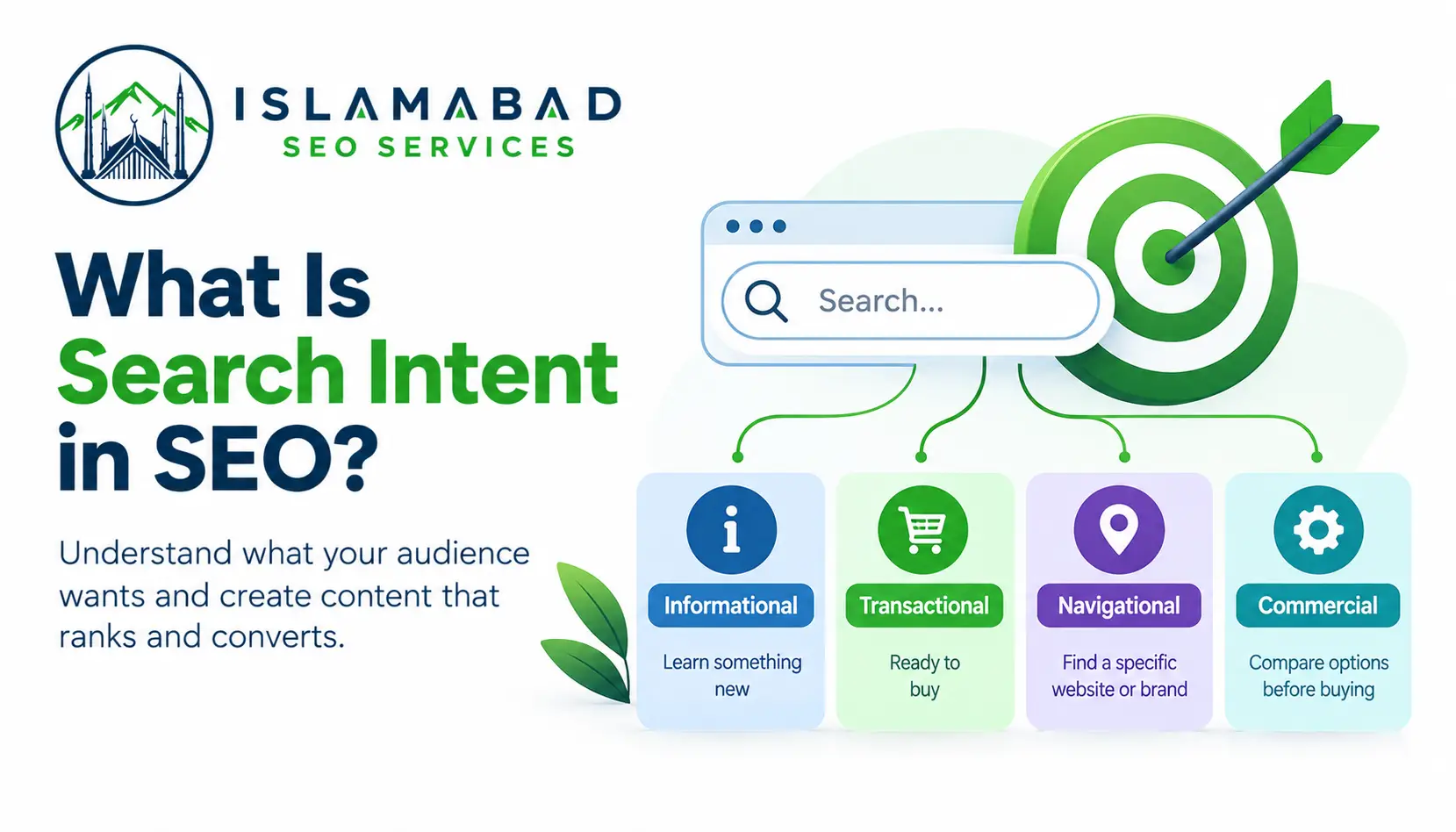
When people search on Google, they usually have a specific goal. They may want to learn something, find a website, compare options, or make a purchase. The reason behind a search is called search intent.
Understanding search intent is an important part of SEO because it helps you create content that matches what users actually want. Instead of focusing only on keywords, you need to understand the purpose behind them.
When your content satisfies search intent, it can attract more relevant visitors, improve user experience, and increase your chances of ranking in organic search results.
What Is Search Intent?
Search intent is the main goal or reason behind a user’s search query. It explains what someone expects to find after entering a phrase into Google.
For example, someone searching for “what is technical SEO” wants to learn something. A person searching for “best SEO tools” may be comparing different options, while someone searching for “buy SEO software” is likely ready to purchase.
Search intent is also known as user intent or keyword intent. Understanding it helps search engines determine which results are most relevant to a query.
Why Is Search Intent Important for SEO?
Google aims to provide results that are useful and relevant to what users are searching for. If your page does not match the search intent, it may struggle to rank even if the keyword is used correctly.
Understanding intent helps you:
- Create content that answers the user’s needs
- Choose the right type of page
- Attract more relevant organic traffic
- Improve user experience
- Increase engagement and conversions
- Build content around real search behavior
For example, the keyword “how to clean white shoes” suggests that the user wants instructions. A product page would probably not satisfy that search.
Search Intent vs Keyword Intent
Search intent focuses on what the user wants to accomplish, while keyword intent looks at the purpose associated with a particular keyword.
For SEO, both concepts help you understand whether a search is informational, navigational, commercial, or transactional.
Instead of asking only, “What keyword should I target?” also ask:
“What does the person searching this keyword actually want?”
4 Main Types of Search Intent
Search intent is commonly divided into four main categories: informational, navigational, commercial, and transactional.
Informational Intent
Informational intent means the user wants to learn something or find an answer.
Examples include:
- What is search intent?
- How does SEO work?
- How to fix a leaking tap
- What is digital marketing?
Blog posts, guides, tutorials, FAQs, and educational content are usually suitable for these searches.
Navigational Intent
Navigational intent occurs when someone wants to reach a specific website, brand, or webpage.
Examples include:
- Facebook login
- Google Search Console
- Nike official website
- Amazon
The user usually already knows where they want to go. For businesses, having clear navigation and properly optimized, indexable pages helps users find the right destination.
Commercial Intent
Commercial intent means the user is researching options before making a decision.
Examples include:
- Best SEO agencies
- Best laptops for students
- SEO software comparison
- WordPress vs Shopify
These users may not be ready to purchase yet, but they are considering their options. Reviews, comparisons, buying guides, and product roundups can work well for this intent.
Transactional Intent
Transactional intent indicates that the user is ready to take action. This could include buying a product, booking a service, signing up, or downloading something.
Examples include:
- Buy running shoes online
- SEO software pricing
- Book a dentist appointment
- Order pizza online
Product pages, service pages, pricing pages, and focused landing pages are commonly used for transactional searches.
How to Identify Search Intent
Before creating content, identify what users expect to see for your target keyword.
Analyze the SERP
One of the easiest ways to understand search intent is to search the keyword on Google and study the search engine results page (SERP).
Look at the top-ranking pages and ask:
- Are they blog posts or product pages?
- Are they guides, reviews, or comparisons?
- Are videos appearing?
- Are there featured snippets?
- Are category or service pages ranking?
- What questions appear in People Also Ask?
If detailed guides dominate the results, the keyword is likely informational. If product pages appear most often, the intent may be transactional.
Understand the Search Query
The wording of a search can provide useful clues.
Words such as what, why, how, guide, tutorial, and meaning often indicate informational intent.
Words such as best, review, comparison, alternatives, and vs commonly suggest commercial research.
Words such as buy, price, order, discount, book, and subscribe often indicate transactional intent.
Long-tail keywords can be especially helpful because they usually reveal a more specific user goal.
Check the Ranking Content
Open several top-ranking pages and examine what they provide. Look at their headings, format, topics, visuals, and calls to action.
This helps you understand what Google considers relevant for the query and what information users are likely expecting.
Use Keyword Research Tools
Many keyword research tools provide intent labels for keywords. These can help you identify potential informational, navigational, commercial, or transactional queries.
However, tool-based labels should not replace SERP analysis. Always check the actual search results because intent can change over time.
How to Optimize Content for Search Intent
Once you understand the intent, create content that directly satisfies it.
Match Content With User Intent
Choose the page type based on what users expect.
Informational searches usually need guides, blog posts, tutorials, or FAQs. Commercial searches may need comparisons, reviews, or buying guides. Businesses can also benefit from professional SEO services to align their content with the search intent of their target audience.
For businesses targeting specific audiences, pages focused on services such as local SEO can also be created around the intent behind relevant local searches.
Choose the Right Content Format
Content format plays an important role in matching intent.
A “how to” query usually needs a step-by-step guide. A “best” query may need a comparison or list. A “buy” query generally needs a product or service page.
Study the current SERP and use the format that best matches the dominant results.
Answer User Questions Clearly
Give users the information they need without making them search through unnecessary introductions.
Use clear headings, short paragraphs, bullet points, examples, and useful visuals. Put important information where users can find it quickly.
Also consider related questions and topics that naturally support the main query.
Improve Content Structure and Readability
Make your content easy to scan on both desktop and mobile.
Use descriptive headings, logical sections, simple language, and focused paragraphs. Avoid unnecessary repetition and keep each section centered on one clear idea.
Optimize Titles and Meta Descriptions
Your title and meta description should clearly communicate what the page offers.
Use the primary keyword naturally and make sure the title matches the user’s intent. Avoid misleading titles that promise something the content does not provide.
Search Intent and SERP Features
Search intent can influence which SERP features Google displays.
Depending on the query, users may see featured snippets, People Also Ask, images, videos, local results, or shopping results.
For example, question-based searches may trigger featured snippets, while product-related searches can display shopping results.
These features provide useful clues about what users want and how you can structure your content.
What Is Mixed Search Intent?
Some keywords do not fit neatly into one category. They have mixed search intent, meaning users may have several goals at once.
For example, someone searching for “best website builders” may want to compare platforms, learn about features, check prices, and decide which option to choose.
For mixed-intent keywords, your content can address multiple related needs. You might include an explanation, comparison, key features, pros and cons, pricing, and recommendations.
Search Intent and the Customer Journey
Search intent can change as users move closer to making a decision.
At first, someone may perform an informational search to understand a problem. Later, they may compare solutions through commercial searches. Finally, they may use transactional searches when they are ready to act.
For example:
Informational: What is website hosting?
Commercial: Best website hosting providers
Transactional: Buy website hosting
Creating content for different stages allows businesses to reach users throughout the customer journey.
Common Search Intent Mistakes
Some common mistakes can prevent content from satisfying user intent:
- Choosing keywords based only on search volume
- Creating the wrong page type for a keyword
- Ignoring the current SERP
- Focusing too much on keyword placement
- Ignoring SERP features
- Making content difficult to scan
- Using titles that do not match the actual content
Always check what Google is showing before targeting an important keyword.
Conclusion
Search intent is a key part of an effective SEO strategy. Ranking is not just about using the right keywords. It is about providing the right content for the people searching those keywords.
Study the SERP, understand what users want, and create content that genuinely satisfies their goal. When you focus on search intent instead of simply chasing rankings, your content becomes more relevant, useful, and valuable to both users and search engines.
Businesses can also review relevant SEO case studies to understand how different SEO strategies can be applied to real websites.
Frequently Asked Questions
What Are the Four Types of Intent in SEO?
The four main types of search intent are informational, navigational, commercial, and transactional. Informational users want to learn, navigational users want to find a specific website, commercial users compare options, and transactional users are ready to take action or make a purchase.
Can You Give Me Some Examples of Search Intent?
Examples include “what is SEO?” for informational intent, “Facebook login” for navigational intent, “best SEO tools” for commercial intent, and “buy SEO software” for transactional intent. These searches show different goals even though they all relate to online search.
What Is the Difference Between Search Intent and a Keyword?
A keyword is the word or phrase a user enters into a search engine, while search intent is the reason behind that search. For example, “best running shoes” is the keyword, while comparing different running shoes is the search intent.
Why Is Search Intent Important in SEO?
Search intent helps you create content that matches what users are actually looking for. When your content satisfies their needs, it can improve relevance, user experience, organic traffic, and your chances of ranking in search results.
How Do You Identify Search Intent for a Keyword?
Search the keyword on Google and examine the top-ranking results. Look at the content types, titles, formats, and SERP features. Keyword research tools can also help identify intent, but checking the actual SERP gives you a clearer picture.