Search has moved beyond conventional search engine results. Search Engine Optimization (SEO) helps your website appear and rank for relevant searches, while Generative Engine Optimization (GEO) focuses on making your content understandable, useful, and citable within AI-generated responses. For businesses in Islamabad and across Pakistan, the practical goal is not to choose between SEO and GEO. Your website needs a visibility strategy that supports rankings, organic traffic, brand mentions, and AI citations across modern search experiences.
What Is Search Engine Optimization (SEO)?
Search Engine Optimization (SEO) is the process of optimizing a website so search engines can crawl, interpret, index, and rank web pages for relevant queries. SEO connects your website with users who search for information, products, services, and solutions through platforms such as Google and Bing.
Effective SEO combines several areas that work together. On-page optimization aligns titles, headings, written content, internal links, images, metadata, and search intent with the target subject. Technical SEO supports crawlability, indexability, website architecture, mobile usability, page performance, canonicalization, and structured data. Off-page SEO builds authority through relevant backlinks, editorial coverage, digital public relations, and credible brand references.
Topical authority matters because search engines evaluate the overall depth and relevance of a website instead of relying only on individual keyword matches. A strong SEO strategy develops connected coverage around important subjects, answers related questions, demonstrates expertise, and creates useful pathways between informational, commercial, and transactional pages.
SEO performance can be measured through rankings, impressions, organic clicks, click-through rate (CTR), conversions, leads, and revenue. Traditional search generally creates a journey from a search result to your website, where your page can provide information, establish credibility, and guide visitors toward a business action.
What Is Generative Engine Optimization (GEO)?
Generative Engine Optimization (GEO) is the process of optimizing content and brand information so generative artificial intelligence (AI) systems can understand, retrieve, summarize, cite, or mention that information in generated responses.
GEO applies to search experiences that produce synthesized answers instead of presenting only a list of ranked webpages. Examples include ChatGPT, Perplexity, Google AI Overviews, Microsoft Copilot, and other AI-powered search interfaces.
GEO emphasizes factual accuracy, clear context, entity relationships, topical depth, direct answers, and authority across relevant online sources. Content becomes easier for AI systems to interpret when important information uses precise language, clearly identifies subjects, supports important claims, and provides sufficient context.
Generative systems do not use one universal optimization formula. Retrieval-Augmented Generation (RAG) systems can retrieve information from external sources and provide that information to a language model as context. Other AI systems can use training data, search indexes, proprietary retrieval systems, or combinations of several information sources.
GEO measurement remains less standardized than SEO measurement. Businesses can monitor AI brand mentions, citation frequency, cited pages, referral traffic from AI platforms, source visibility, and the accuracy of information presented about the brand.
SEO vs. GEO: What Is the Key Difference?
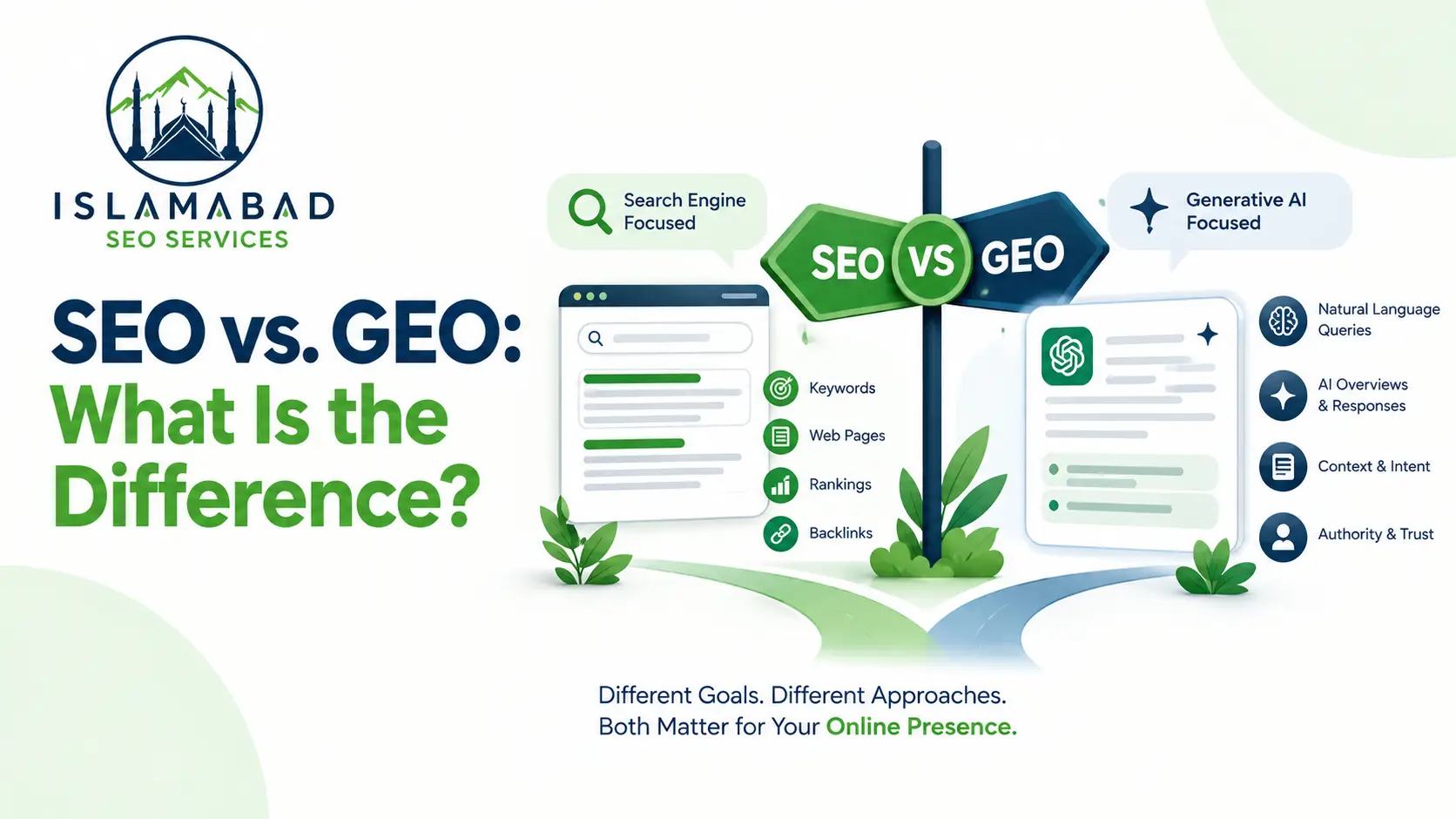
SEO focuses primarily on earning search rankings and website visits, while GEO focuses on gaining visibility within AI-generated answers through mentions, citations, and references. SEO generally positions a webpage within a set of search results. GEO can place information from your website or references to your brand directly inside a synthesized response.
The user journey demonstrates this distinction clearly. A traditional search user may enter a query, review several results, select a webpage, and continue research on that website. An AI search user may ask a detailed question, receive a synthesized response, compare information within that response, and continue the research without opening every cited source.
SEO therefore places greater emphasis on discoverability and destination pages. GEO places greater emphasis on answer clarity, source usefulness, and information selection. Both approaches depend on relevance, technical accessibility, credibility, and high-quality content, but search engines and generative systems present information differently.
SEO vs. GEO: How Are the Goals Different?
SEO aims to generate organic visibility and qualified website visits, while GEO aims to secure representation within generated answers. SEO reporting commonly examines rankings, impressions, CTR, organic sessions, leads, conversions, and revenue. GEO reporting examines whether AI systems mention a brand, cite specific content, describe services accurately, or use a business as a relevant information source.
The difference affects content planning. An SEO page can target a specific search query and direct visitors toward a service, product, resource, or contact page. A GEO-oriented section needs to answer an important question clearly enough for an AI system to interpret the information without requiring missing surrounding context.
A combined strategy supports both objectives. Your website needs pages capable of attracting traditional search traffic while developing enough topical depth and authority for AI systems to identify the business as a relevant source.
SEO vs. GEO: How Do Search Queries Differ?
SEO commonly begins with keywords and conventional search queries, while GEO needs to consider detailed conversational prompts, follow-up questions, comparisons, and multiple requirements within one request. Traditional searches can be short, such as “SEO services,” “technical SEO audit,” or “best CRM.” AI prompts can contain several conditions, locations, comparisons, budgets, industries, or specific business needs.
Keyword research remains valuable because keyword data reveals search demand, terminology, intent, and relationships between topics. GEO adds another research layer by identifying the questions users ask AI systems, the entities mentioned in those questions, and the information required to provide a complete response.
For example, a business can target “best CRM for a small B2B sales team” through SEO. A broader GEO content strategy can address pricing, integrations, team requirements, reporting capabilities, security, implementation, and suitability for particular sales processes.
SEO vs. GEO: How Does Content Optimization Differ?
SEO content needs to remain crawlable, relevant, structured, and aligned with search intent. GEO requires the same foundation while placing greater emphasis on clear, extractable, context-rich information. Strong SEO content still needs useful titles, headings, internal links, descriptive metadata, technically accessible pages, relevant copy, and appropriate structured data.
GEO-friendly content benefits from direct definitions, concise answers, explicit entity relationships, original information, supporting evidence, and logically organized sections. Question-and-answer structures can help because each section establishes a clear subject and provides an identifiable response.
Do not create separate low-value pages simply to target phrases that an AI platform might use. Strengthen the main topic instead through related questions, precise terminology, expert authorship, original insights, supporting evidence, and comprehensive topical coverage.
Answer the user’s immediate question before adding supporting information. A direct structure helps readers find information faster and gives search and AI systems clearly defined information units to interpret.
SEO vs. GEO: What Role Does Technical SEO Have?
Technical SEO remains essential because AI visibility does not replace the need for accessible, indexable, and well-structured webpages. Crawlability, indexability, XML sitemaps, internal linking, website architecture, canonical URLs, mobile usability, page performance, and structured data create the technical foundation required for modern search visibility.
Google’s guidance for AI search experiences continues to emphasize established SEO fundamentals. AI Overviews and AI Mode can use web sources, which makes accessible and indexable content important for websites that want their information to participate in these experiences.
Structured data can help search systems understand entities and page information, but valid schema markup does not guarantee rankings, citations, or AI mentions. Use structured data that accurately represents visible content instead of adding markup solely to influence generated responses.
Technical SEO should therefore remain part of an integrated search strategy rather than become a separate replacement for traditional optimization.
SEO vs. GEO: Are Backlinks Still Relevant?
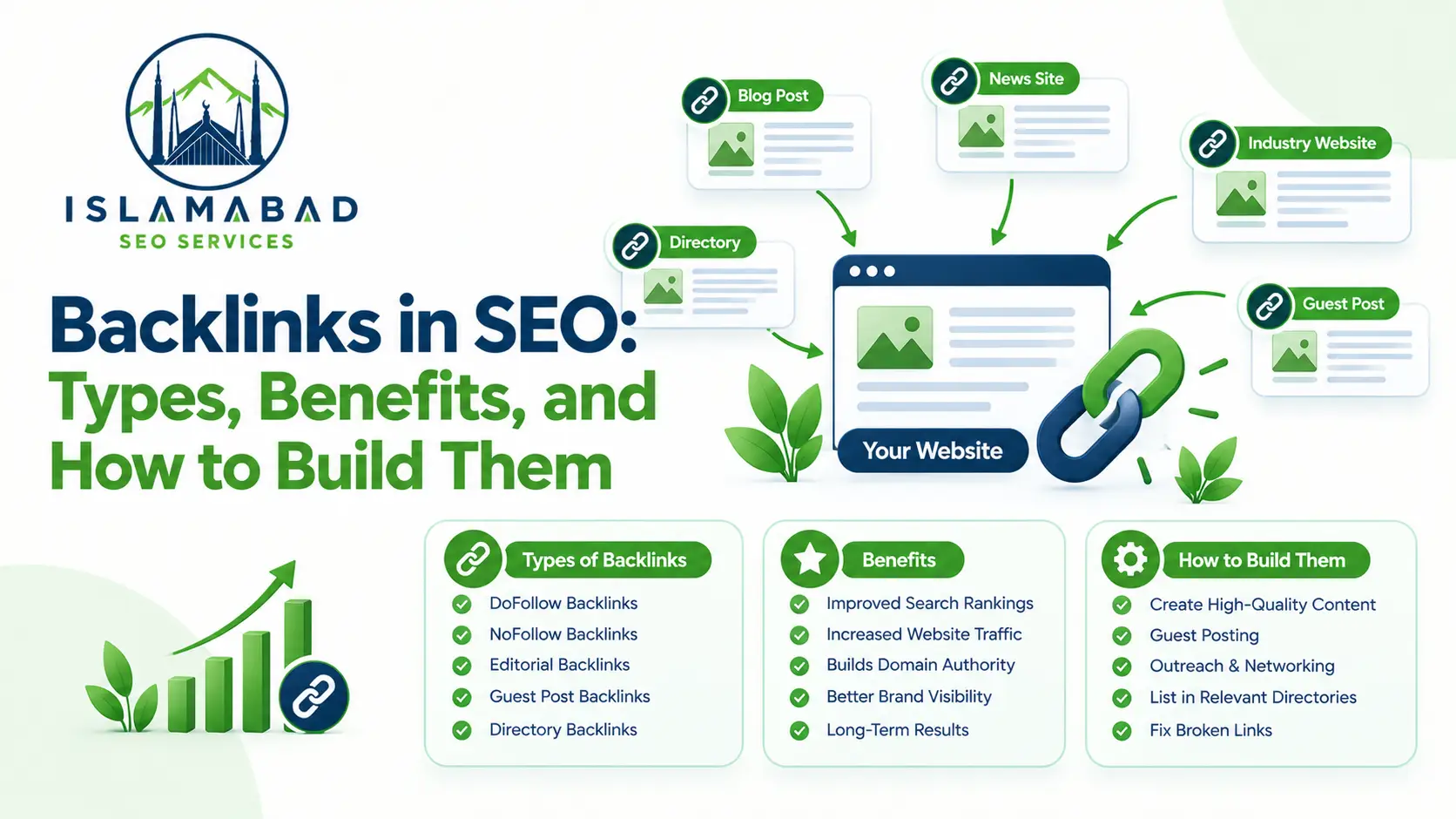
Backlinks remain an important SEO authority signal, while GEO requires a broader approach to online authority that considers relevant mentions, citations, expertise, and brand consistency. Relevant editorial links can support authority and help search engines discover and evaluate website content.
GEO broadens the authority question beyond the number of hyperlinks pointing to a domain. AI systems can encounter information about a business through industry publications, expert commentary, reviews, interviews, digital PR, forums, articles, and other online sources.
An unlinked brand mention does not automatically become an AI citation. GEO has no single public authority score that guarantees inclusion in generated responses. Your objective should be to establish a credible and consistent presence across relevant sources while earning quality backlinks where those links provide genuine value.
SEO vs. GEO: How Does User Intent Differ?
SEO often moves users from a search result to a specific destination page, while GEO can satisfy part of the user’s intent directly within an AI-generated response. SEO supports informational, commercial, navigational, and transactional journeys through pages designed around different user requirements.
GEO can combine several research steps into one interaction. A user may request a comparison, receive summarized information, ask a follow-up question, and request additional details without leaving the AI platform.
Your content strategy therefore needs to support both immediate answers and deeper actions. Definitions, comparisons, explanations, service information, pricing details, case studies, and conversion pages can address different stages of the customer journey. A connected content system gives each page a clear purpose instead of forcing every page to achieve the same outcome.
SEO vs. GEO: How Can You Optimize for Both?
You can support SEO and GEO through one integrated content strategy rather than building two separate systems. Start with technical SEO, establish strong information architecture, develop topical depth, and make important answers precise, evidence-based, and easy to interpret.
A practical approach includes 5 steps:
- Audit crawlability, indexing, internal linking, structured data, canonicalization, website architecture, and page performance.
- Map important topics to keywords, entities, search intent, customer questions, and commercial stages.
- Rewrite priority sections so direct answers appear early and supporting evidence follows naturally.
- Strengthen authority through expert content, original research, digital PR, relevant backlinks, and consistent brand information.
- Track rankings, organic traffic, conversions, AI mentions, citations, and AI referral traffic as separate visibility signals.
Do not build a completely different website architecture for GEO. Maintain one coherent information system that communicates consistent brand information to users, search engines, and generative AI systems.
For businesses seeking professional optimization in Pakistan, Islamabad SEO Services can approach traditional and generative search as connected visibility channels rather than unrelated marketing activities.
What Should You Measure for SEO and GEO?
Measure SEO through established search performance metrics and GEO through AI visibility signals because the two channels produce different user journeys. SEO reporting can include impressions, rankings, organic clicks, CTR, conversions, revenue, indexed pages, and technical health.
GEO reporting can monitor brand mentions, citation frequency, cited URLs, answer accuracy, competitor references, source visibility, and traffic referred by AI platforms. Manual prompt testing can create an initial benchmark, while specialized AI visibility tools can support broader monitoring.
Separate reporting creates clearer analysis. A webpage can generate organic traffic without receiving AI citations, while a brand can appear in AI responses without generating measurable referral traffic. Both outcomes provide useful visibility information, but business value depends on the relevant conversion path.
Should You Invest in SEO, GEO, or Both?
SEO and GEO address different discovery environments, so businesses can evaluate both according to audience behavior, business objectives, and customer journeys. SEO supports rankings, organic website visits, and measurable conversions. GEO adds visibility within AI-generated answers, citations, and brand mentions.
A website that relies heavily on organic search needs strong SEO foundations. A business with research-intensive customer journeys can monitor how AI systems represent the brand and its information. Local businesses, software companies, professional service providers, ecommerce businesses, publishers, and agencies can evaluate both channels because customers increasingly use different interfaces to research solutions.
Islamabad SEO Services can approach modern search visibility through a unified strategy that combines technical SEO, topical authority, expert content, digital PR, and clear information designed for generative systems.
Final Takeaway
SEO and GEO address related but distinct visibility requirements. SEO helps search engines discover, understand, and rank webpages. GEO helps generative systems understand, select, summarize, cite, and mention information from relevant sources.
A modern strategy does not require replacing one discipline with another. Build technically accessible webpages, develop authoritative topical coverage, strengthen relevant brand references, answer important questions directly, and monitor traditional search performance separately from AI visibility.
Search interfaces continue to evolve, but useful and credible information remains important across both environments. Your website needs clear information, strong technical foundations, relevant authority, and content that users and search systems can understand.
Frequently Asked Questions
Is GEO replacing SEO?
No, GEO is not replacing SEO because traditional search remains an important discovery channel while GEO addresses visibility within generative search experiences. Businesses still need crawlable websites, relevant content, technical optimization, and authority while developing clear information that AI systems can understand and cite.
Which is more important, SEO or GEO?
Neither channel has universal priority because the appropriate focus depends on audience behavior, business model, search patterns, and conversion paths. SEO supports rankings and organic traffic, while GEO supports AI visibility, citations, and brand mentions within generative search experiences.
Can SEO and GEO be used together?
Yes, SEO and GEO can work together through one integrated technical and content strategy. Strong crawlability, indexing, site architecture, topical authority, structured data, expert content, relevant backlinks, and direct answers can support visibility across traditional search results and generative search environments.
Does GEO require different content from SEO?
No, GEO does not require a completely separate content library, although existing SEO content may need clearer answers, stronger context, evidence, entity relationships, and extractable information. A well-optimized webpage can support both environments when technical accessibility and user intent remain central to content development.