On-page SEO is the process of optimizing individual webpages, their content, HTML elements, and user experience so search engines can understand their purpose and users can find useful information quickly. Website owners can directly control many on-page elements, including content, headings, title tags, URLs, internal links, images, metadata, and structured data.
The goal is to connect search intent with relevant page content. For example, a page targeting “local SEO services” should explain local optimization, Google Business Profile, citations, reviews, location targeting, and service processes instead of repeatedly using the same keyword. Effective on-page optimization helps pages appear for relevant searches while also supporting business conversions.
For businesses seeking organic visibility, Islamabad SEO Services uses on-page SEO as part of a broader search strategy. It works alongside technical SEO, content, authority, and link building rather than replacing them.
Why Is On-Page SEO Important?
On-page SEO helps search engines understand the relevance of a webpage while making information easier for visitors to read and navigate. When page elements match search intent, users can find answers more efficiently and search engines can better interpret the subject.
Effective optimization can support:
- Better alignment between search queries and content
- Improved organic visibility for relevant searches
- Clearer page structure and navigation
- Stronger connections between related pages
- More opportunities for qualified traffic and conversions
Businesses can also understand how SEO helps your business when evaluating the wider value of search optimization.
What Are the Main On-Page SEO Factors?
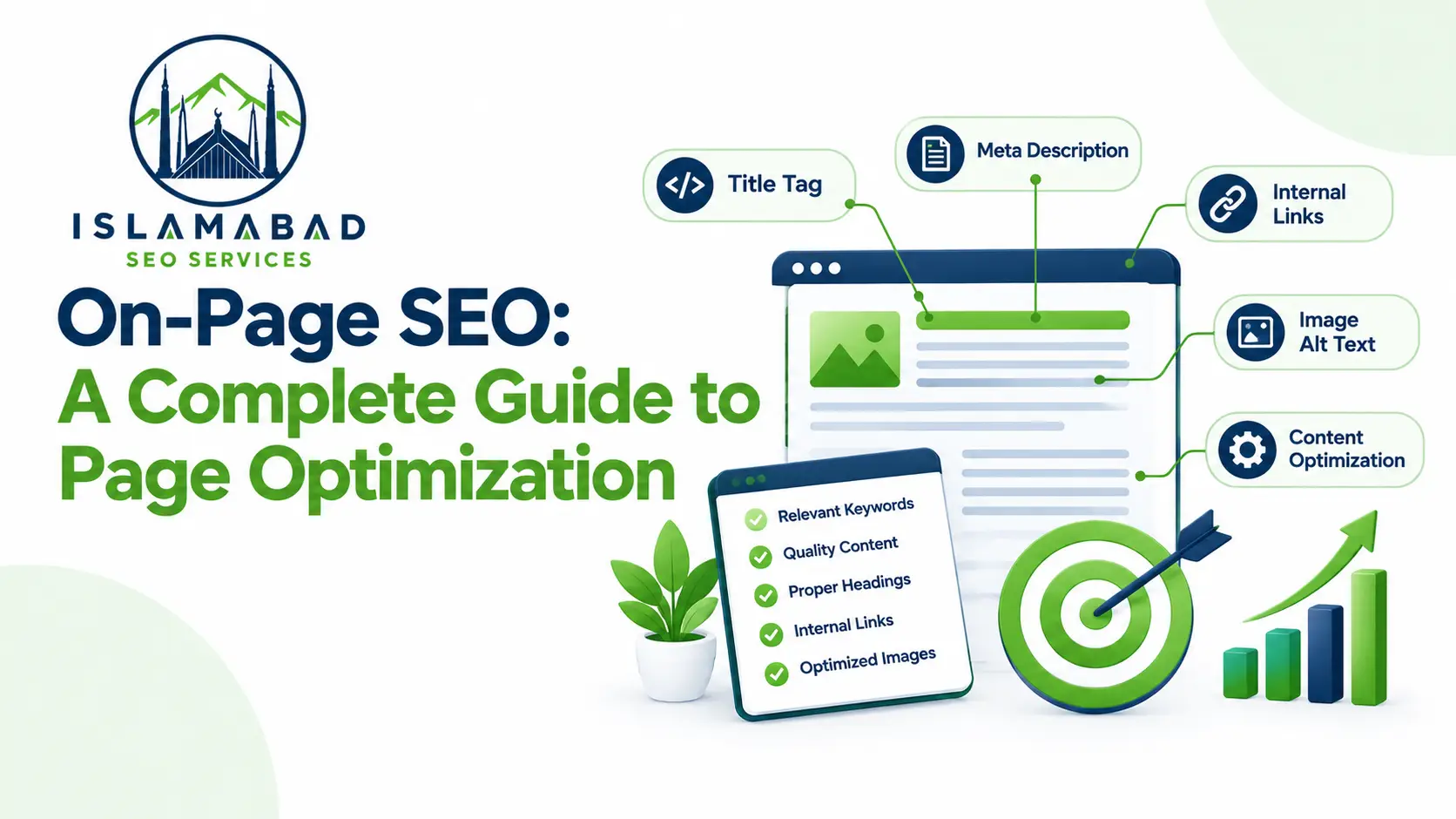
Important on-page elements include content quality, search intent, title tags, meta descriptions, headings, URLs, internal links, images, structured data, page speed, and user experience. Each element helps communicate the subject and purpose of a webpage.
Content and Search Intent
Content should satisfy the reason behind a user’s search. Common search intents include informational, navigational, commercial investigation, and transactional.
For example, “what is technical SEO” requires an educational explanation, while “technical SEO services” may require information about services, processes, benefits, experience, and conversion options.
Keyword research identifies the language users search for, but keyword placement alone does not make content useful. Optimizing website content for SEO means matching the information, structure, and wording to the needs behind the query.
Title Tags and Meta Descriptions
The title tag communicates the main subject of a page and can appear in search results and browser tabs. Keep it concise, accurate, and naturally focused on the primary topic.
A meta description provides a short summary that can influence search-result clicks. It should explain the page’s value rather than repeat keywords. Search engines may rewrite snippets, so the actual content should remain consistent with the metadata.
Heading Structure
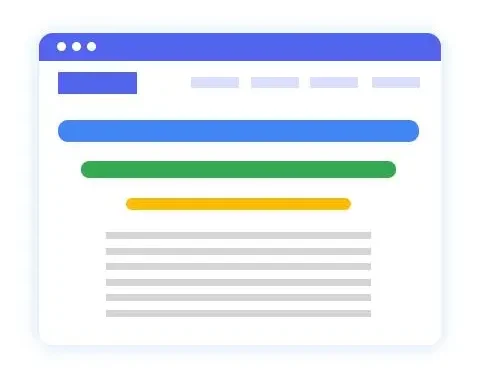
H1, H2, and H3 headings organize information into a logical hierarchy. Use a focused H1 for the primary topic, H2 headings for major sections, and H3 headings for supporting points.
A clear structure makes content easier to scan and helps search systems understand relationships between sections. Headings should describe the content accurately instead of being used only for keyword placement.
SEO-Friendly URLs
An optimized URL should be short, readable, descriptive, and relevant to the page topic. For example, /on-page-seo/ communicates the subject more clearly than a URL containing random numbers or unnecessary parameters.
Keep important URLs stable because frequent changes can create redirects, broken links, and indexing problems. Include a relevant term when it naturally describes the page, but avoid long keyword-filled URLs.
Internal Linking
Internal links connect related pages within the same website. A service page can link to relevant guides, supporting services, case studies, or contact pages when these resources provide useful next steps.
Use descriptive anchor text that explains the destination. Effective internal linking helps visitors discover more information while giving search engines additional context about relationships between pages.
Image Optimization
Images can improve accessibility, relevance, and user experience when they contribute meaningfully to the content. Use descriptive filenames, accurate alt text, suitable dimensions, and compressed formats.
Alt text should describe meaningful image content for users who cannot see it. Decorative images generally do not require detailed alt text. Large or unoptimized images can also slow down page loading.
Structured Data
Structured data provides machine-readable information about content and entities on a webpage. Depending on the page, schema can describe organizations, services, products, articles, events, and other supported content types.
Valid structured data does not guarantee higher rankings or rich results. It should accurately represent visible page content and follow search engine guidelines.
What Is an Example of On-Page SEO?
A practical example is a service page built around one clear search intent with a relevant title, H1, URL, useful content, internal links, images, and suitable structured data.
For example, a page targeting “web design services in Islamabad” could explain website design services, website types, the design process, features, pricing considerations, portfolio examples, FAQs, and contact options.
The title could be “Web Design Services in Islamabad | Custom Website Design,” while the URL could use /web-design-services-islamabad/. The H1 should clearly communicate the service, with supporting headings covering the process, features, maintenance, and common questions.
Location-focused pages can also benefit from local SEO when targeting searches connected to specific geographic areas.
How Do You Optimize a Page Step by Step?
A successful on-page SEO process starts with search intent and keyword research, followed by improvements to content, structure, metadata, links, images, and technical elements.
- Identify the main query and search intent.
- Review relevant search results and competing pages.
- Research primary, secondary, long-tail, and related terms.
- Create a clear H1 and logical H2/H3 structure.
- Write original content that directly satisfies the query.
- Optimize the title tag, meta description, and URL.
- Add relevant internal and authoritative external links.
- Optimize images, alt text, dimensions, and loading performance.
- Add suitable structured data where applicable.
- Check mobile usability, indexing, canonicalization, and Core Web Vitals.
- Monitor impressions, clicks, rankings, CTR, and conversions.
- Update the page when facts, services, products, or search intent change.
The process should be adapted to the purpose of each URL rather than applying the exact same template to every page.
How Do You Measure On-Page SEO Performance?
Measure on-page SEO through organic impressions, clicks, click-through rate, rankings, indexed pages, traffic, and conversions. Google Search Console provides query and page performance data, while analytics tools can connect organic traffic with leads, purchases, and form submissions.
Do not evaluate a page using only one keyword position. A well-optimized page can rank for multiple related queries, so query coverage, qualified traffic, and conversions provide a broader view of performance.
When comparing results, also consider seasonality, technical changes, algorithm updates, and major content revisions.

What Are Common On-Page SEO Mistakes?
Common mistakes include keyword stuffing, weak search-intent alignment, thin or duplicate content, poor internal linking, unclear headings, slow pages, and inaccurate metadata.
Do not create content simply to reach a word count. Avoid adding unrelated keywords because competitors use them. Established URLs should not be changed without a proper migration plan, and schema should never describe information that is missing from the visible page.
Relevant internal links should also be added where they genuinely help users discover supporting information.
How Should Commercial Pages Be Optimized?
Commercial pages need both relevant information and clear conversion paths. A service page should explain the service, target audience or location, customer problems, deliverables, process, pricing factors, trust signals, and next action.
Where genuine evidence exists, include case studies, reviews, credentials, service areas, or project examples. Calls to action can include requesting a quote, booking a consultation, calling the business, or submitting an inquiry.
Pages targeting transactional searches should make the next step obvious without removing the useful information visitors need before taking action.

On-Page SEO Checklist
Before publishing or updating a page, check the following:
- Search intent and primary query are clearly defined.
- Content answers the topic without unnecessary repetition.
- H1, H2, and H3 headings follow a logical hierarchy.
- The title tag accurately describes the page.
- Meta description communicates the page’s value.
- URL is concise and descriptive.
- Internal links point to relevant pages.
- Images have suitable filenames, dimensions, compression, and alt text.
- Structured data matches visible content.
- The page works properly on mobile and desktop.
- Indexing and canonical settings are correct.
- Core Web Vitals and loading performance are monitored.
- Commercial pages have clear conversion paths.
- Organic performance is tracked after publication.
Frequently Asked Questions
What Is On-Page SEO?
On-page SEO is the process of improving webpage content, HTML elements, structure, and user experience to increase relevance and search visibility. It includes search intent, keywords, titles, headings, URLs, internal links, images, structured data, and page performance.
Which Tool Is Useful for On-Page SEO?
Google Search Console is an important starting tool because it provides data about queries, impressions, clicks, indexing, and page performance. Tools such as Screaming Frog, Semrush, Ahrefs, and content optimization platforms can support deeper audits, competitor research, and content analysis.
How Do You Do On-Page SEO Step by Step?
Start by identifying search intent and target queries. Then improve the content, headings, title tag, meta description, URL, internal links, images, structured data, and page performance. Check indexing and mobile usability before monitoring clicks, impressions, rankings, and conversions.
How Much Does On-Page SEO Cost?
On-page SEO pricing depends on page count, website complexity, competition, content requirements, and technical workload. Optimizing one page generally requires less work than a complete website audit, while competitive commercial websites may need broader research, content improvements, technical optimization, and ongoing monitoring.