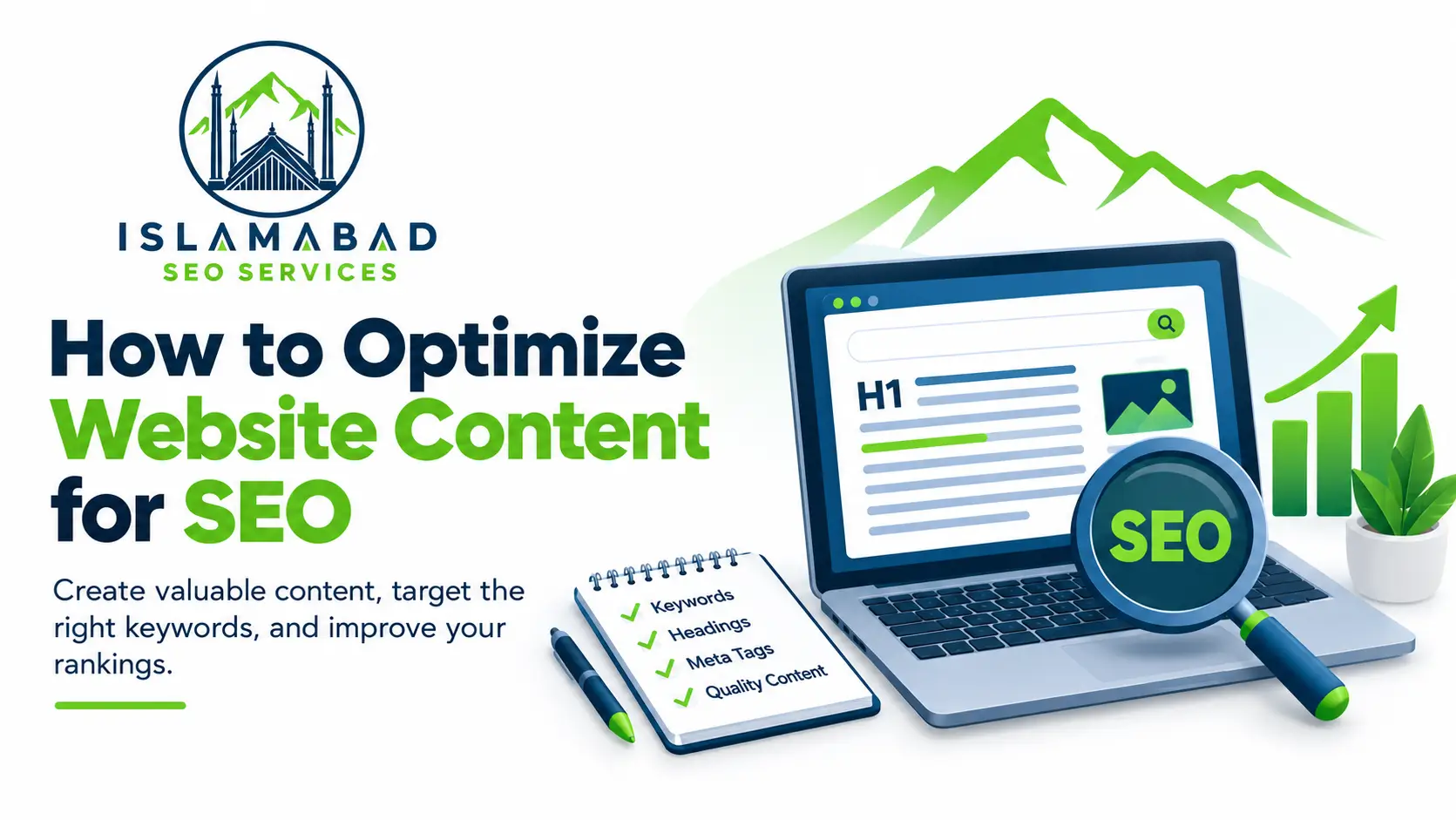
Creating content is not enough to attract organic traffic. Your pages also need to be easy for search engines to understand and useful for the people who read them.
SEO content optimization helps you improve website pages so they better match search queries and user expectations. It includes keyword research, search intent, content structure, internal linking, image optimization, technical SEO, and regular updates.
The goal is simple: create content that answers real questions, provides value, and makes it clear what your page is about.
What Makes Content SEO Friendly?
SEO-friendly content is useful, relevant, well-organized, and easy for search engines to crawl and understand.
It does not mean filling a page with keywords. Instead, focus on creating content that has a clear purpose and satisfies the reader.
SEO-friendly content usually includes:
- Relevant keywords
- Clear headings
- Helpful information
- Short, readable paragraphs
- Useful internal links
- Optimized images
- Mobile-friendly design
These elements can help your content provide a better experience while improving its search visibility.
Why Your Content Needs SEO Optimization
Good content may struggle to attract visitors if it does not target the right searches or clearly answer user needs.
SEO optimization helps search engines understand your topic and determine when your page may be relevant.
It can help you:
- Increase organic visibility
- Attract relevant visitors
- Improve user experience
- Build topical authority
- Generate leads and sales
The aim is not simply to get more traffic. You want visitors who are genuinely interested in your content, products, or services.
Steps to Optimize Content for Search Engines
Research the Topics and Keywords Your Audience Uses
Start by finding the terms and questions your audience searches for. Keyword research helps you choose topics that are relevant to your business and useful to potential customers.
Do not focus only on search volume. Consider relevance, competition, keyword difficulty, and business value.
Related searches and common questions can also help you discover supporting topics to include in your content.
Understand the Intent Behind Every Search
Search intent is the reason behind a search.
For example, someone searching “what is SEO” wants information, while someone searching “SEO services near me” may be looking for a provider.
Before creating content, consider what users expect to find. Check the search results for your target keyword and create a page that matches that intent.
Create Useful Content That Answers Real Questions
Your content should solve a problem or answer a question rather than exist simply to target a keyword.
Focus on:
- Clear explanations
- Practical advice
- Relevant examples
- Original insights
- Helpful answers
You can review competing pages to identify what they cover and find gaps you can address. Never copy their content. Instead, provide additional value and a better experience.
Add Keywords in the Right Places
Use your primary keyword naturally in important areas such as the title, introduction, relevant headings, URL, and body content.
Include related terms and variations where they fit naturally. This helps provide context around your main topic.
Avoid keyword stuffing. Repeating the same phrase too often makes your content harder to read and does not create a better experience for users.
Make Your Content Simple to Scan
Online readers often scan a page before reading it fully. Large blocks of text can make useful information difficult to consume.
Make your content easier to navigate with:
- Short paragraphs
- Clear headings
- Bullet points
- Numbered lists
- Simple language
- Descriptive subheadings
A logical structure helps readers find information quickly and gives search engines a clearer understanding of your page.
Improve Your Title, Meta Description, and URL
Your title should clearly explain what the page covers and use the primary keyword naturally when appropriate.
A strong meta description gives users a quick idea of what they will find on the page and can encourage more clicks.
Keep URLs short and descriptive.
For example:
example.com/seo-content-optimization/
is easier to understand than a URL containing random numbers or unnecessary parameters.
Connect Related Pages with Internal Links
Internal links connect pages within your website. They help visitors discover related information and help search engines understand the relationship between your pages.
For example, an SEO content guide could link to related pages about keyword research, technical SEO, and on-page optimization.
Use relevant anchor text and only link to pages that provide additional value.
Use Relevant External References
External links can make your content more useful when they point to reliable sources.
Use trusted websites for statistics, research, official guidelines, and industry information. Government websites, academic resources, and recognized organizations can be good choices.
Do not add external links simply to increase the number of links on a page. Each link should have a useful purpose.
Optimize Images for Search and Speed
Images can improve engagement and make information easier to understand, but large files can slow down your website.
Use descriptive image filenames and accurate alt text. Compress images and choose suitable formats to reduce file size.
Alt text should describe the actual image rather than being stuffed with keywords.
Videos, infographics, and other media should also support the topic without negatively affecting page speed.
Add Structured Data When It Fits
Structured data, also known as schema markup, gives search engines additional information about your page.
Depending on the content, you may use Article, Product, Organization, LocalBusiness, Breadcrumb, or Event schema.
Schema does not guarantee better rankings, but accurate structured data can help search engines understand your content and may support enhanced search results.
Review and Update Older Content
Content can become outdated as facts change, new information appears, and search intent evolves.
Review important pages regularly and update outdated information, statistics, examples, links, and missing sections.
Focus on meaningful improvements rather than simply changing the publication date.
Technical Factors That Support SEO Content
Your content also needs a strong technical foundation. Search engines must be able to access and understand your pages.
Check Mobile Usability
Make sure your content works properly on phones, tablets, and desktops.
Use responsive layouts, readable text, simple navigation, and properly sized images to provide a smooth experience across devices.
Improve Page Loading Speed
Slow pages can frustrate visitors and increase the chance that they leave.
Compress images, use caching, reduce unnecessary scripts, and optimize your website’s code and hosting.
Core Web Vitals can also help you monitor loading, responsiveness, and visual stability.
Make Your Pages Easy to Crawl and Index
Search engines need to crawl and index your pages before they can appear in search results.
Check for broken links, crawl errors, blocked resources, and indexing problems. XML sitemaps can help search engines discover important URLs on your website. Tools such as Google Search Console can help identify these issues.
Handle Similar and Duplicate URLs Properly
Multiple URLs with similar content can make it difficult for search engines to determine which version should be prioritized.
Canonical tags can identify the preferred URL and help consolidate signals when appropriate.
How to Make Content Ready for AI Search
AI-powered search systems rely on context and meaning to understand content. Clear and well-organized information can make your pages easier to interpret.
Structure Information Around Clear Questions
Answer important questions directly. Use clear headings, definitions, lists, and short explanations so key information is easy to find.
Build Context with Related Topics and Entities
Do not focus only on one keyword. Cover relevant concepts, terms, tools, organizations, and related topics where appropriate.
This gives search engines and AI systems more context about your subject.
Demonstrate Expertise and Trust
Support important claims with credible sources and add original insights, practical examples, or expert knowledge.
Useful and trustworthy information can help your content stand out from pages that simply repeat existing information.
How to Check Whether Your Content Is Working
After publishing, use performance data to understand what is working and what needs improvement.
Monitor Search Visibility and Organic Traffic
Use tools such as Google Search Console and Google Analytics to monitor rankings, impressions, clicks, click-through rate, and organic traffic.
Track Clicks, Engagement, and Conversions
Traffic is only one part of SEO performance. Track meaningful actions such as form submissions, purchases, signups, downloads, or enquiries.
Find Pages That Need Improvement
Look for pages losing traffic, ranking close to the first page, receiving impressions but few clicks, or no longer matching search intent.
Improving existing content can often be more effective than constantly creating new pages.
SEO Content Optimization Checklist
Before publishing or updating a page, check that:
- The content matches search intent
- Relevant keywords are used naturally
- The information provides genuine value
- Headings make the page easy to scan
- Title, meta description, and URL are optimized
- Relevant internal links are included
- Trusted external sources are used where needed
- Images have useful alt text and optimized file sizes
- Appropriate schema is implemented
- The page works well on mobile
- Technical SEO issues are addressed
- Information is accurate and current
- The page supports a clear business goal
Frequently Asked Questions
How do I optimize my website content for SEO?
Research relevant keywords, understand search intent, create useful content, use keywords naturally, improve readability, optimize page elements, add internal links, and update content regularly.
What makes content SEO friendly?
SEO-friendly content is useful, relevant, well structured, easy to read, and accessible to search engines.
How often should I update website content?
Update content when information becomes outdated, rankings decline, search intent changes, or new information can improve the page.
Does SEO content need to be long?
No. Content should be long enough to satisfy the search intent. There is no fixed word count that guarantees rankings.
How can I optimize content for AI search?
Use clear answers, descriptive headings, related topics, relevant entities, credible sources, and original insights. Well-structured content is easier for search systems to understand.