


Running an online store without a solid SEO strategy is like opening a shop in a back alley and hoping customers somehow find you. Whether you are launching a brand-new ecommerce site or trying to improve rankings on an established one, understanding how to do SEO for an ecommerce website is what separates stores that rank from those that struggle to get noticed on Google.
In this guide, we will walk you through every essential step from site structure and keyword research to technical SEO and content optimization so you can start driving consistent organic traffic to your product pages, category pages, and blog posts.
What is Ecommerce SEO?
Before diving into the how, let us clarify what ecommerce SEO is. Simply put, ecommerce SEO is the process of optimizing your online store so that its pages rank higher in search engine results. Unlike regular websites that rely mostly on blog content, ecommerce sites have unique challenges: hundreds (or thousands) of product pages, duplicate content issues, complex site structures, and the constant need to balance user experience with search engine requirements.
The goal is to make it easier for Google to crawl, index, and rank your pages so potential customers find your products when they search.
Step 1: Build a Clean and Logical Site Structure
Your site structure is the foundation of everything. A well-organized ecommerce site helps both search engines and visitors find what they need quickly. Think of it as a hierarchy:
Homepage → Category Pages → Subcategory Pages → Product Pages
Keep your structure shallow. Every product page should be reachable within three clicks from the homepage. This not only improves crawl efficiency but also distributes link equity across your ecommerce site more effectively.
Here are a few practical tips for structuring your online store:
- Use descriptive, keyword-rich URLs. For example, yourstore.com/mens-leather-jackets/brown-bomber-jacket is far better than yourstore.com/product?id=4827.
- Create a logical category page structure that mirrors how customers actually search for products.
- Implement breadcrumb navigation so users (and Google) can trace the path from the homepage to any product page.
A clean site structure is a ranking factor that many store owners overlook, but it makes every other SEO effort more effective.
Step 2: Comprehensive Keyword Research for Ecommerce
Keyword research for ecommerce is different from standard blog keyword research. You are not just looking for informational queries; you need to target commercial and transactional intent keywords that signal buying readiness.
Start by categorizing your keywords into three buckets:
Transactional keywords are terms like “buy running shoes online” or “best price wireless headphones.” These go on your product pages and category pages.
Informational keywords are terms like “how to choose the right running shoe” or “wireless vs wired headphones comparison.” These belong on your blog posts.
Navigational keywords include branded searches like “Nike Air Max 2026” that should lead to specific product pages.
Use tools like Google Search Console, Google Analytics, Ahrefs, or SEMrush to identify what keywords your ecommerce site already ranks for and where the gaps are. Look at what competitors rank for and find opportunities they have missed.
Long-tail keywords are especially valuable for ecommerce sites. A term like “waterproof hiking boots for women size 8” has lower search volume but much higher conversion potential than “hiking boots.”
Step 3: Optimize Your Product Pages
Your product pages are where conversions happen, so they deserve serious attention. Here is how to optimize them properly:
Write Unique Product Descriptions
Never copy manufacturer descriptions. Duplicate content is one of the biggest SEO killers for ecommerce sites because hundreds of other stores are using the exact same text. Write original product descriptions that naturally include your target keywords, highlight benefits over features, and answer the questions a buyer would ask before purchasing.
A good product description should be at least 150 to 300 words. Include specifications, use cases, materials, sizing information, and anything else that adds genuine value.
Optimize Product Images
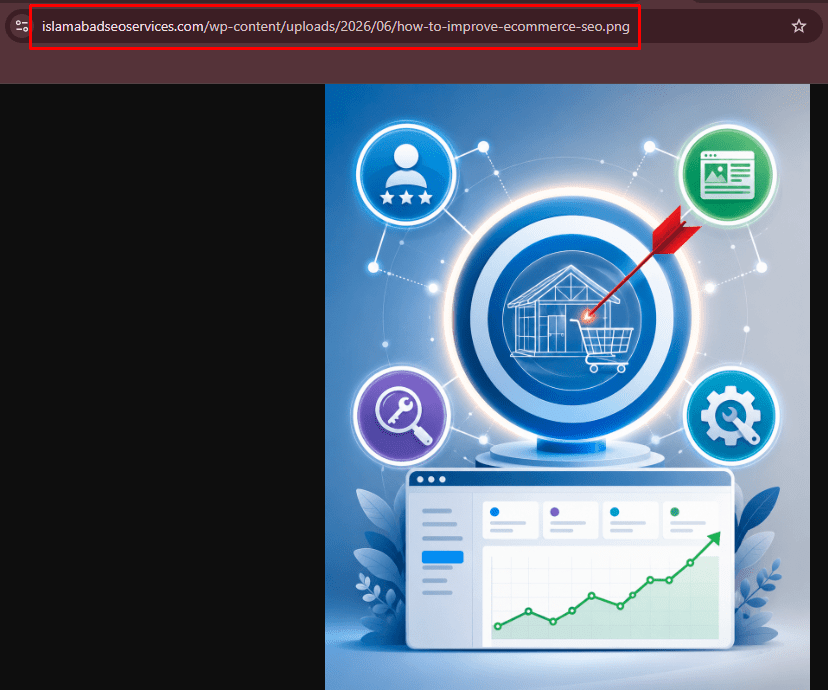
Product images do more than make your store look professional; they are an SEO opportunity. Compress images to improve page load speed, use descriptive file names (e.g., blue-denim-jacket-front.jpg instead of IMG_3847.jpg), and always add alt text that describes the image while naturally including relevant keywords.
For example, instead of writing alt text like “jacket,” write “men’s blue denim jacket with button closure front view.” This helps your product images appear in Google Image search, which drives a surprising amount of traffic to ecommerce sites.
Use Schema Markup
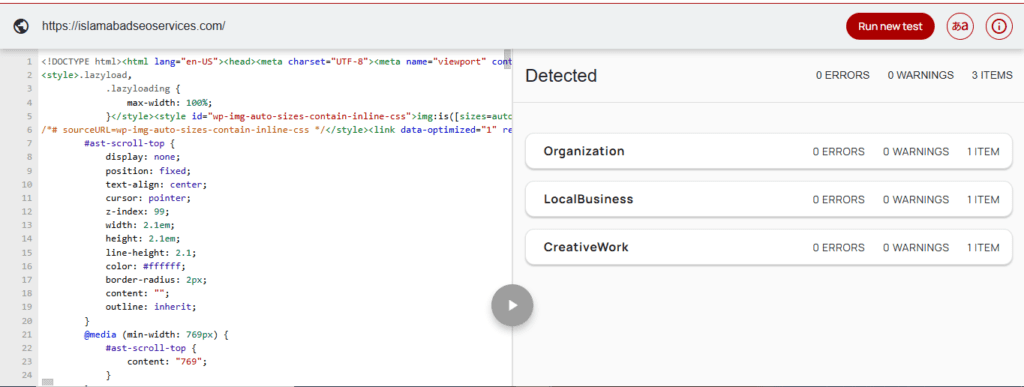
Add product structured data (schema markup) to every product page. This tells Google exactly what your page is about and can earn you rich snippets in search results showing price, availability, ratings, and reviews directly on the search results page. Rich snippets dramatically improve click-through rates.
Step 4: Optimize Category Pages for Maximum Visibility
Many store owners focus only on product pages and ignore their category pages. That is a mistake. Category pages often have the highest ranking potential for competitive, high-volume keywords.
Add 200 to 500 words of unique, keyword-optimized content to each category page. This could be a brief introduction at the top explaining what the category offers, who it is for, and why your products stand out. Avoid stuffing keywords, write naturally, and prioritize helping the customer.
Optimize the title tag, meta description, and H1 heading for each category page with your primary keyword. For instance, if your category is “Women’s Running Shoes,” your title tag might be: Women’s Running Shoes – Lightweight & Durable | YourStore.
Internal links from category pages to top-performing product pages and related blog posts also help distribute authority and keep visitors engaged.
Step 5: Fix Technical SEO Issues
Technical SEO is the backbone that supports all your on-page efforts. If search engines cannot properly crawl and index your ecommerce site, none of your other optimizations matter.
Improve Site Speed
Page load speed is a confirmed ranking factor. Ecommerce sites tend to be image-heavy and script-heavy, so this needs constant attention. Compress images, enable browser caching, use a content delivery network (CDN), minimize CSS and JavaScript files, and choose a reliable hosting provider. Aim for a load time under three seconds on both desktop and mobile.
Ensure Mobile-Friendliness
Google uses mobile-first indexing, meaning it primarily uses the mobile version of your site for ranking. Your online store must be fully responsive, with easy navigation, readable text, and tap-friendly buttons on all screen sizes.
Fix Crawl Errors and Broken Links
Regularly audit your ecommerce site using Google Search Console and tools like Screaming Frog. Fix 404 errors, redirect broken URLs, and ensure your XML sitemap is clean and up to date. Crawl errors waste your crawl budget and create a poor user experience.
Handle Duplicate Content
Ecommerce sites generate duplicate content in several ways: product variations (size, color), pagination, URL parameters, and session IDs. Use canonical tags to tell Google which version of a page is the original. Implement proper pagination with rel=”next” and rel=”prev” attributes, and configure your robots.txt file to block unnecessary parameter-based URLs from being crawled.
Implement HTTPS
If your online store is still on HTTP, switch to HTTPS immediately. Security is a ranking factor, and customers will not trust a store that does not have an SSL certificate, especially when entering payment information.
Step 6: Build a Strong Internal Linking Strategy
Internal links are one of the most underutilized SEO tactics for ecommerce sites. A smart internal linking strategy helps search engines understand the relationship between your pages and distributes page authority throughout your site.
Link from blog posts to relevant product pages and category pages. Link from product pages to related products. Link from category pages to subcategories and featured products. Use descriptive anchor text that includes relevant keywords rather than generic phrases like “click here.”
A well-planned internal linking structure also improves user experience by helping visitors discover products they might not have found otherwise, thereby increasing time on site and reducing bounce rate.
Step 7: Create SEO-Driven Blog Content
Blog posts are how you capture informational search traffic and build topical authority. Ecommerce sites that invest in content marketing consistently outperform those that rely solely on product and category pages.
Write blog content that answers the questions your potential customers are asking. If you sell kitchen appliances, create guides like “How to Choose the Best Blender for Smoothies” or “Cast Iron vs Non-Stick Pans: Which Is Better?” These blog posts attract visitors at the top of the funnel who may not be ready to buy yet but will remember your brand when they are.
Every blog post should include internal links to relevant product pages and category pages. This creates a content ecosystem where your informational pages feed traffic and authority to your commercial pages.
Use Google Search Console data to find queries your site is appearing for but not ranking well. These are low-hanging fruit topics where a targeted blog post can quickly improve your visibility.
Step 8: Use Google Search Console and Google Analytics
You cannot improve what you do not measure. Google Search Console and Google Analytics are two free tools that every ecommerce site owner must use.
Google Search Console shows you which queries bring impressions and clicks, which pages are indexed, crawl errors, mobile usability issues, and Core Web Vitals performance. Use it to identify pages ranking on page 2 of Google; these are prime candidates for optimization that can yield quick wins.
Google Analytics provides deeper insights into user behavior: which pages visitors land on, how long they stay, what they buy, and where they drop off. Use this data to identify high-bounce-rate pages that need better content or faster load times, and to understand which traffic sources drive the most revenue.
Set up conversion tracking to tie your SEO efforts directly to sales. This helps you prove ROI and make data-driven decisions about where to focus your optimization efforts.
Step 9: Earn Quality Backlinks
Off-page SEO remains a critical ranking factor for ecommerce sites. Earning backlinks from authoritative, relevant websites signals to Google that your online store is trustworthy and worth ranking.
Effective link-building strategies for ecommerce include creating shareable resources like buying guides and comparison charts, reaching out to bloggers and influencers for product reviews, getting listed in relevant industry directories, publishing original research or survey data that journalists want to reference, and fixing broken links on other websites by offering your content as a replacement.
Avoid buying links or participating in link schemes. Google penalizes these tactics, and the short-term gains are never worth the long-term risk.
Which Ecommerce Platform Is Best for SEO?
If you are still choosing a platform, this is a question worth addressing. The answer depends on your needs, but some platforms handle SEO better out of the box than others.
Shopify offers clean code, fast load times, automatic sitemaps, and built-in SSL. However, its rigid URL structure (you cannot remove /collections/ or /products/ from URLs) and limited control over robots.txt can be limiting for advanced SEO.
WooCommerce (WordPress) gives you complete control over every aspect of SEO through plugins like Yoast or Rank Math. You can customize URLs, schema markup, sitemaps, and everything else. The trade-off is that you need to manage hosting and security yourself.
Magento is powerful for large-scale ecommerce sites with complex catalogs, but it requires technical expertise and proper server resources to run well.
Custom-built solutions offer maximum flexibility but require significant development investment.
The best platform is the one that you can maintain well. A perfectly optimized WooCommerce store will outrank a neglected Shopify store every time, and vice versa. Choose based on your resources, technical capability, and growth plans.
How to Improve SEO of an Ecommerce Website: Quick-Win Checklist
If you are looking for immediate improvements, focus on these high-impact actions first:
- Audit and fix all title tags and meta descriptions across your product pages and category pages.
- Add unique, keyword-rich product descriptions to your top 20 selling products.
- Compress all product images and add descriptive alt text.
- Fix broken links and 404 errors using Google Search Console.
- Add schema markup to product pages for rich snippets.
- Write three to five blog posts targeting high-volume informational keywords in your niche.
- Build internal links from your highest-traffic pages to underperforming product pages.
- Improve site speed by optimizing images, enabling caching, and minimizing render-blocking scripts.
- Eliminate duplicate content with canonical tags and proper URL parameter handling.
- Set up Google Analytics and Google Search Console if you have not already.
Final Thoughts
Learning how to do SEO of an ecommerce website is not a one-time project; it is an ongoing process that compounds over time. Every product description you optimize, every technical issue you fix, and every blog post you publish adds to your site’s authority and visibility.
The ecommerce sites that dominate search results are the ones that treat SEO as a core business function, not an afterthought. Start with the fundamentals covered in this guide, measure your results, and keep refining your SEO strategy month after month.
If you need expert help optimizing your online store, Islamabad SEO Services specializes in ecommerce SEO for businesses across Pakistan and beyond. From technical audits to content strategy and link building, we help ecommerce brands turn organic traffic into revenue.
